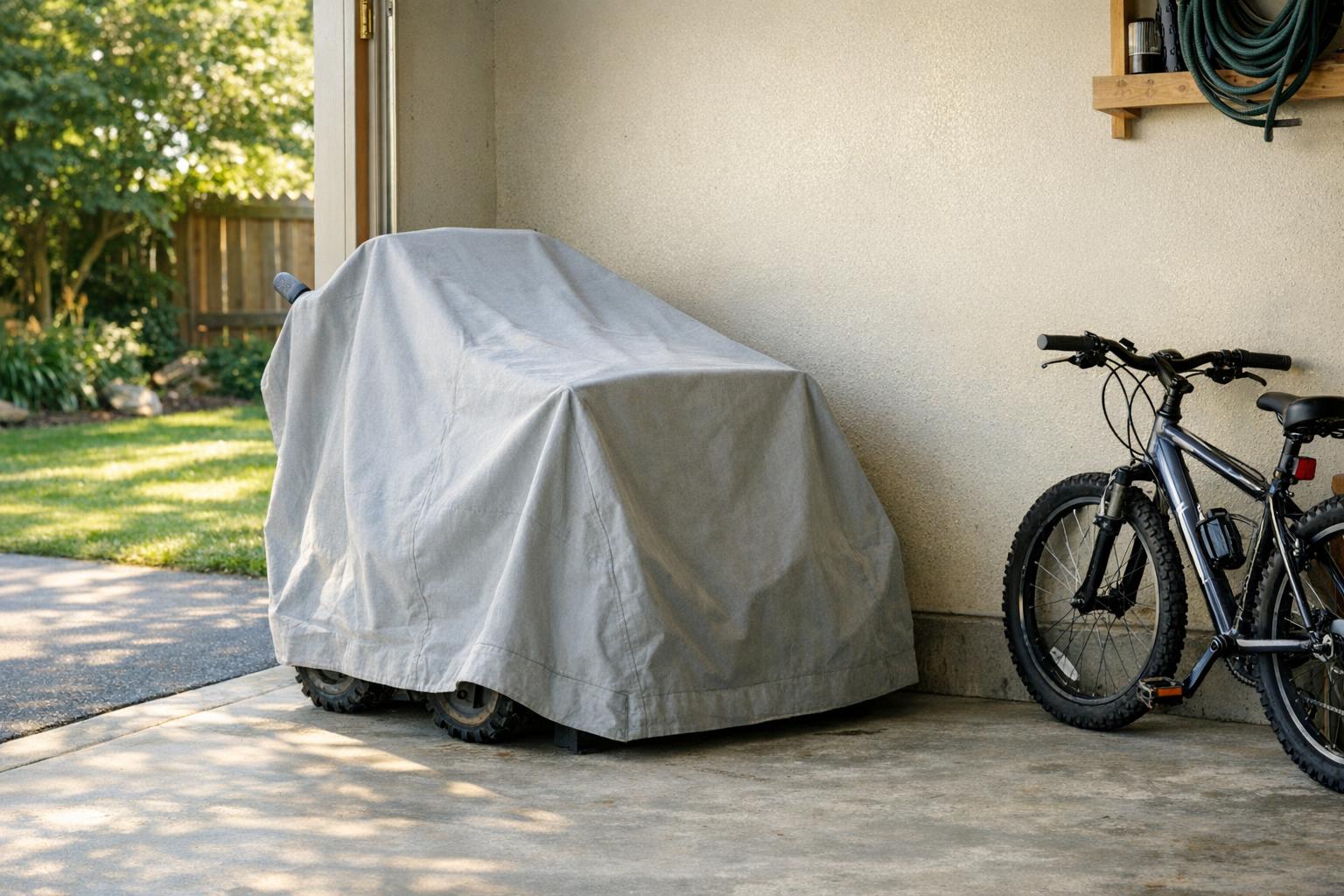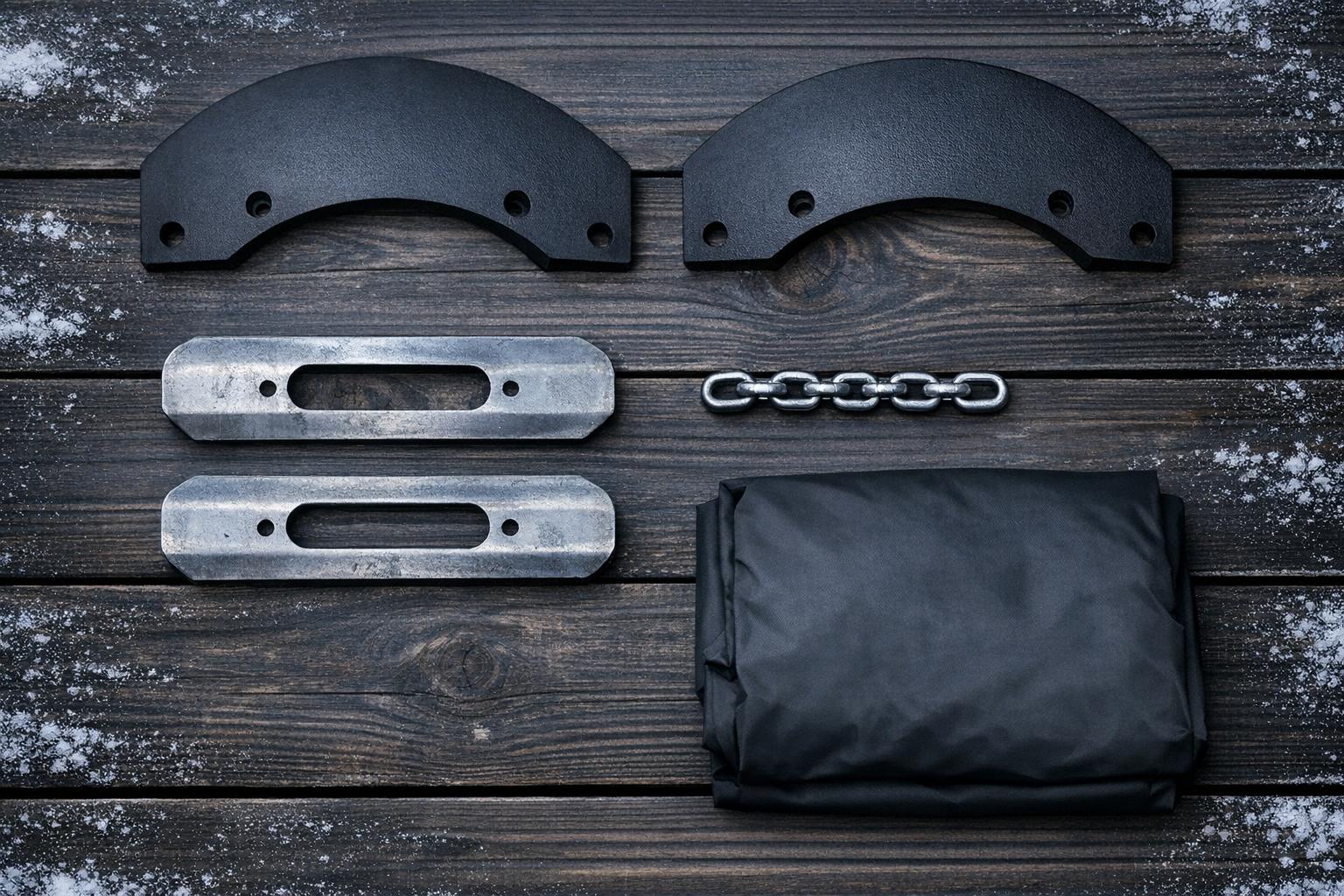
Snow blower maintenance divides cleanly into two categories: the routine items an operator manual explicitly assigns to the owner, and everything else. This guide covers the first category and is deliberately conservative about the second. Machines with a stored-energy auger, a high-speed impeller and, on gas units, a combustion engine and fuel system are not a good place to improvise. The manual for your exact model is the authority throughout.
The manual is the specification
Every interval, fluid type, torque figure and part number in this article is model-specific, and the operator manual for your exact model is where those numbers live. Manufacturers publish manuals online, and a manual is worth downloading before you need it. Where this guide and your manual disagree, the manual wins.
Before any maintenance task, shut the machine off, remove the ignition key or battery pack, and wait for all moving parts to stop. This applies to every item below without exception.
Shear pins
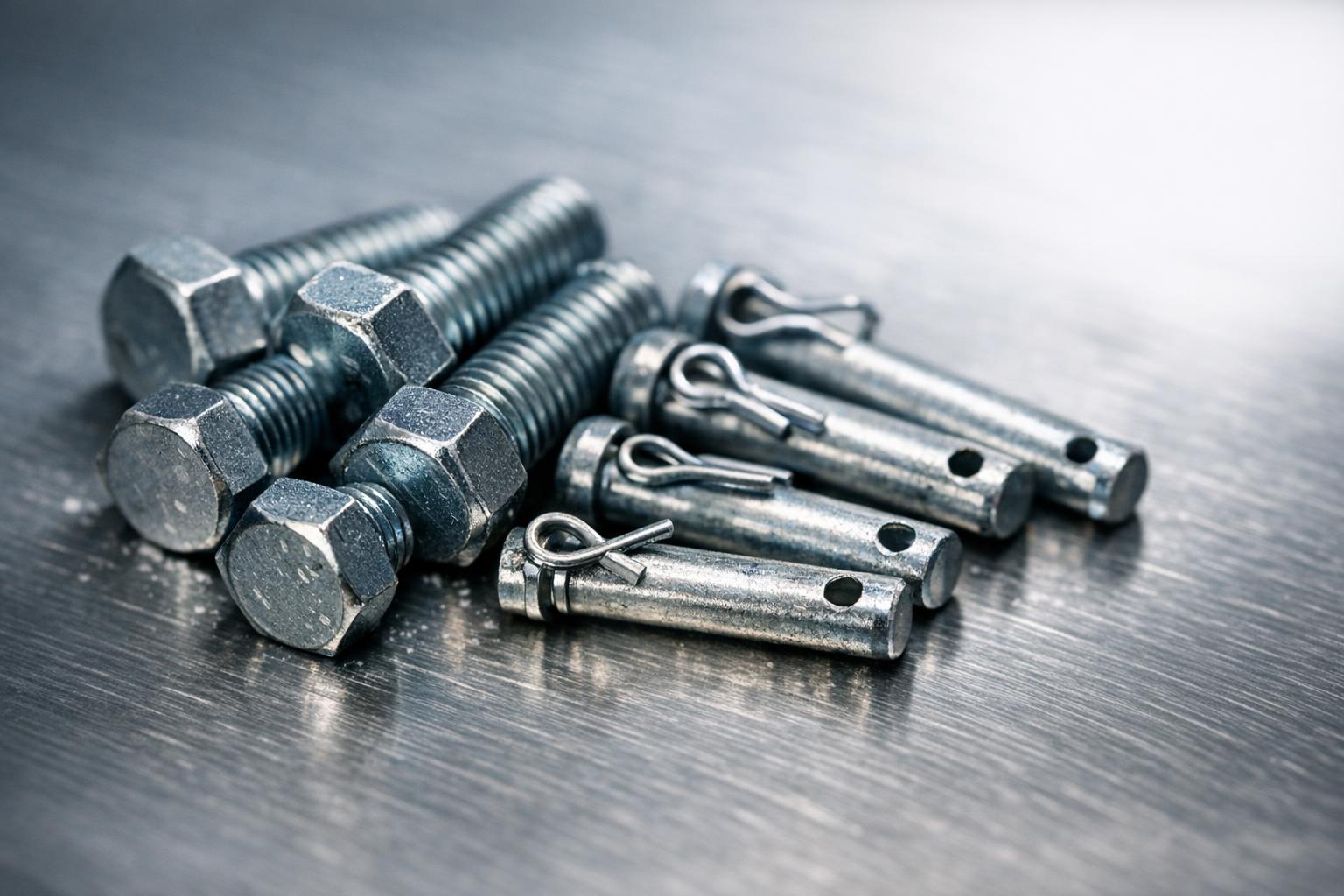
Shear pins are sacrificial fasteners that connect the auger to its shaft. When the auger hits something solid, the pin is designed to break so the gearbox does not. A broken shear pin is a normal event, not a fault, and replacing one is a task manuals routinely assign to the owner.
Use the exact pin specified by the manufacturer. A hardware-store bolt of the same diameter will not shear at the designed load, and the damage it prevents the pin from absorbing goes into the gearbox instead. Keep spares - see the parts and accessories guide.

Skid shoes and the scraper bar
Skid shoes set the height of the auger housing above the surface and are the main adjustment separating gravel operation from paved operation. They wear down and are designed to be reversed or replaced. The scraper bar at the base of the housing is similarly consumable.
Adjust both to the clearance your manual specifies for your surface type. The reasoning behind those clearances is covered in the gravel and paved surfaces guide.
Belts, cables and controls
Auger and drive belts wear and eventually slip. Control cables stretch. Manuals often include an owner-level adjustment procedure for cable tension and a visual inspection procedure for belts. Inspection is always an owner task; replacement may or may not be, depending on the machine and your own competence.
If a belt needs replacing and the procedure involves separating the auger housing from the frame, that is a reasonable point to involve a dealer.
Fluids and fuel systems on gas machines
Oil level and condition, fuel condition and spark plug appearance are standard owner checks on gas machines, done to the intervals the manual specifies. Fuel that has sat through a summer without stabiliser is a common cause of hard starting - the summer storage guide covers the end-of-season procedure that prevents it.
Carburettor work, fuel system repair and engine internals are dealer territory. This site does not publish repair procedures for them, and no article should be your source for that work.
Keeping a simple record
A maintenance record does not need to be elaborate. A note in the manual or a card taped inside the garage door, listing the date of each oil change, belt inspection, shear pin replacement and dealer service, is enough. Over several seasons it turns vague impressions into a pattern: a machine shearing pins unusually often is telling you something about the surface or the operating speed.
Records also matter at resale and for warranty conversations, where documented routine maintenance is the difference between a claim and an argument. Note the model and serial number on the same card so you are not crawling behind the machine with a torch when you need to order a part.
The seasonal checkpoints are the natural times to update it: the winter preparation checklist and the summer storage guide.
When to stop and call a dealer
Stop and book service if the machine vibrates abnormally, if the auger turns when the control is released, if there is a fuel leak, if the engine runs but the auger will not engage, or if anything about the machine's behaviour has changed suddenly. An auger that turns unexpectedly is a serious hazard.
Battery machines have fewer failure modes but the same rule: electrical faults, motor faults and pack faults go to authorised service, not to a workbench. Never clear a clogged chute or auger housing with your hands. Shut the machine off, remove the key or battery pack, wait for every moving part to stop, and use the clean-out tool supplied with the machine.