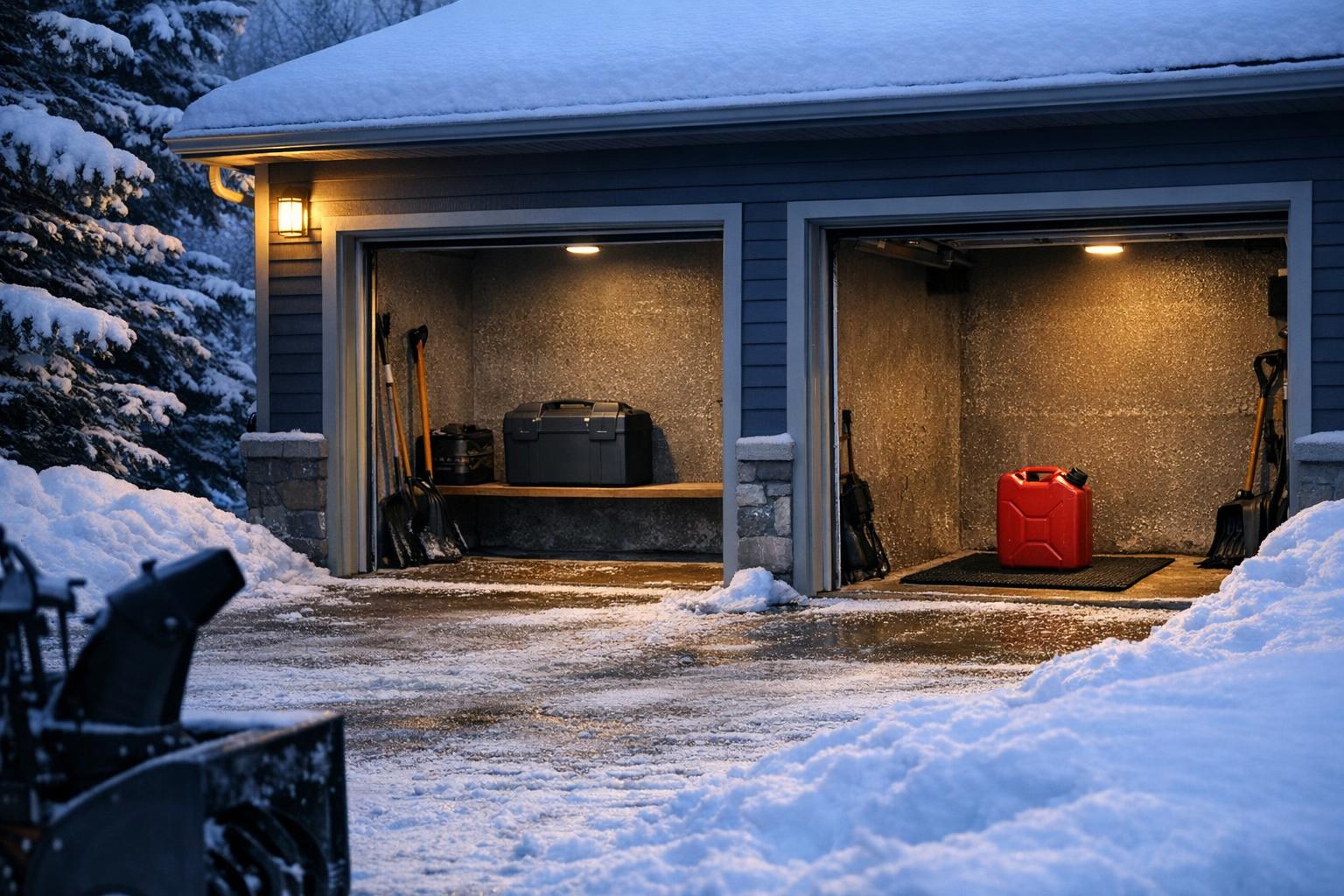
A snow blower spends roughly two thirds of the year not being used, and most of the problems that appear in November are created in April. Storage is where a gas fuel system either survives or degrades, and where a battery pack either holds its capacity or quietly loses it. Neither outcome requires much work - it requires the right work, done once, at the end of the season.
Clean and dry before anything else
Snow carries road salt and grit. Both stay on the machine after the last use and both accelerate corrosion over a warm, humid summer. Clean the auger housing, chute and frame, then let the machine dry completely before it goes into storage.
Check the chute and clean-out tool while you are there, and note anything that needs attention. Writing it down in April is considerably easier than remembering it in November - the winter preparation checklist is where that note gets used.
Fuel: the two accepted approaches
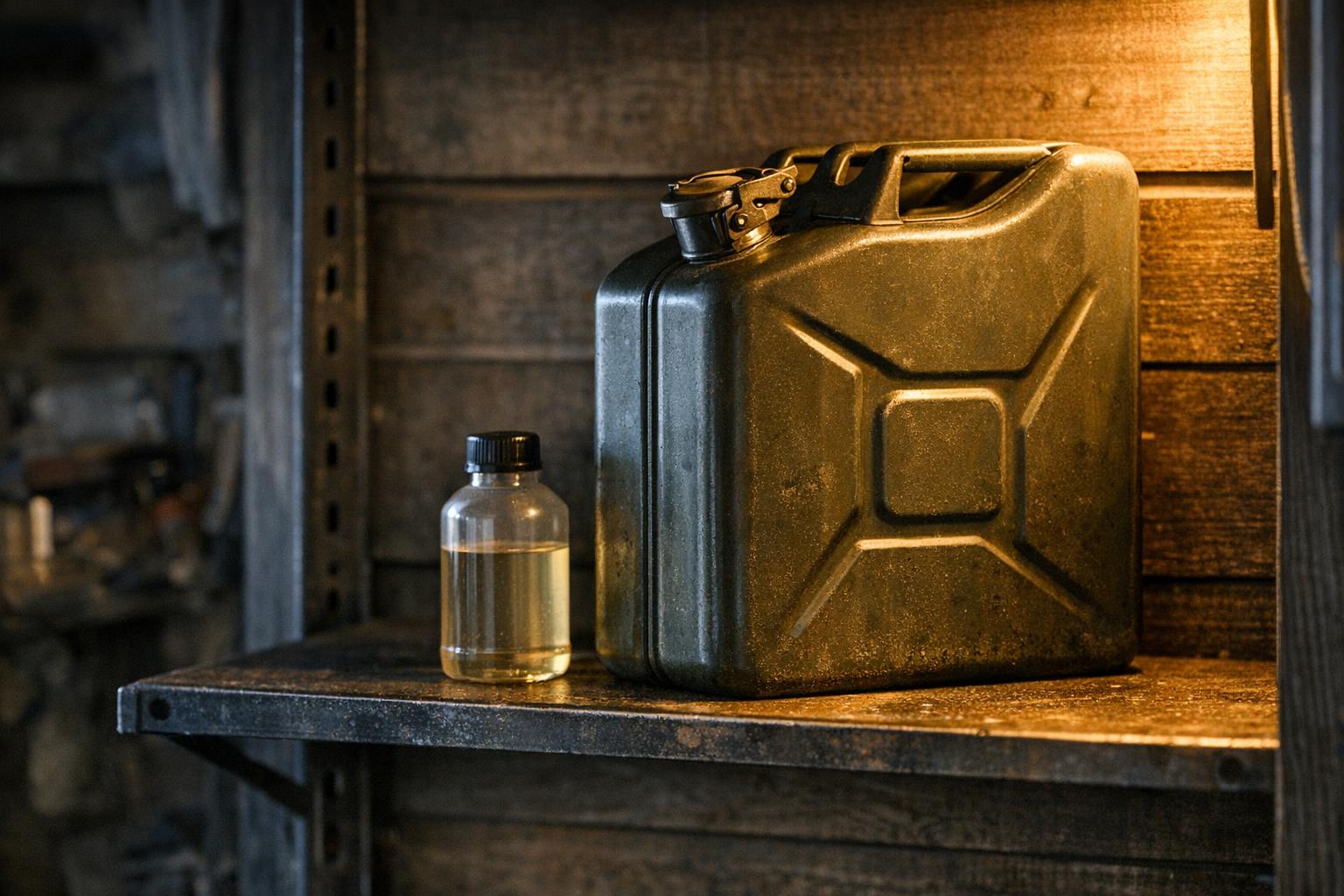
Manufacturers generally describe two acceptable end-of-season fuel procedures, and your manual will specify which applies to your engine. One is to fill the tank with fresh fuel treated with a stabiliser and run the engine long enough to draw the treated fuel through the entire fuel system. The other is to drain the fuel system completely and run the engine until it stops on its own.
What is not acceptable is leaving untreated fuel to sit for eight months. Ethanol-blended fuel attracts moisture and degrades, and the result is the hard starting and rough running that fills dealer workshops every autumn.
Fuel storage safety
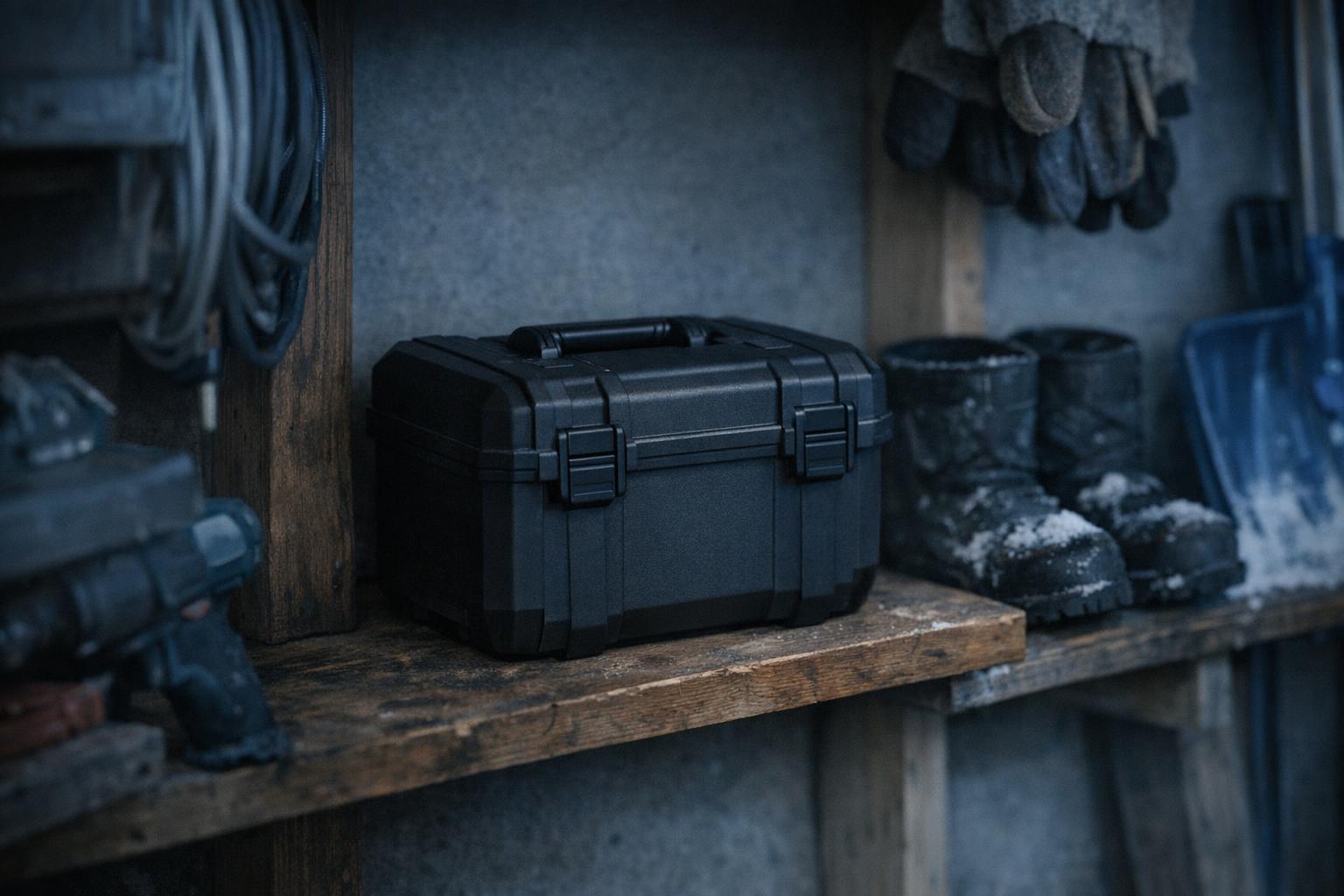
Stored fuel is a fire hazard and should be treated as one. Use an approved container, store it away from living spaces and away from any ignition source including water heaters and furnaces, and follow local regulations on quantity. Never store fuel in a container it was not designed for.
Fire safety authorities publish guidance on home fuel storage, and it is worth reading once. This is an area where the consequences of improvisation are severe.
Battery storage per the manufacturer
Battery packs are stored according to the manufacturer's published practice, which typically specifies a charge state range and a temperature range. Storing a pack fully depleted, or in an uninsulated space that swings between extremes, shortens its useful life. The specifics vary by manufacturer, so use their documentation rather than general advice.
Store packs separately from the machine where the manual recommends it, and check the charge state periodically over the summer if the manufacturer asks you to. The battery vs gas guide covers how pack longevity factors into the overall ownership picture.
Where the machine sits
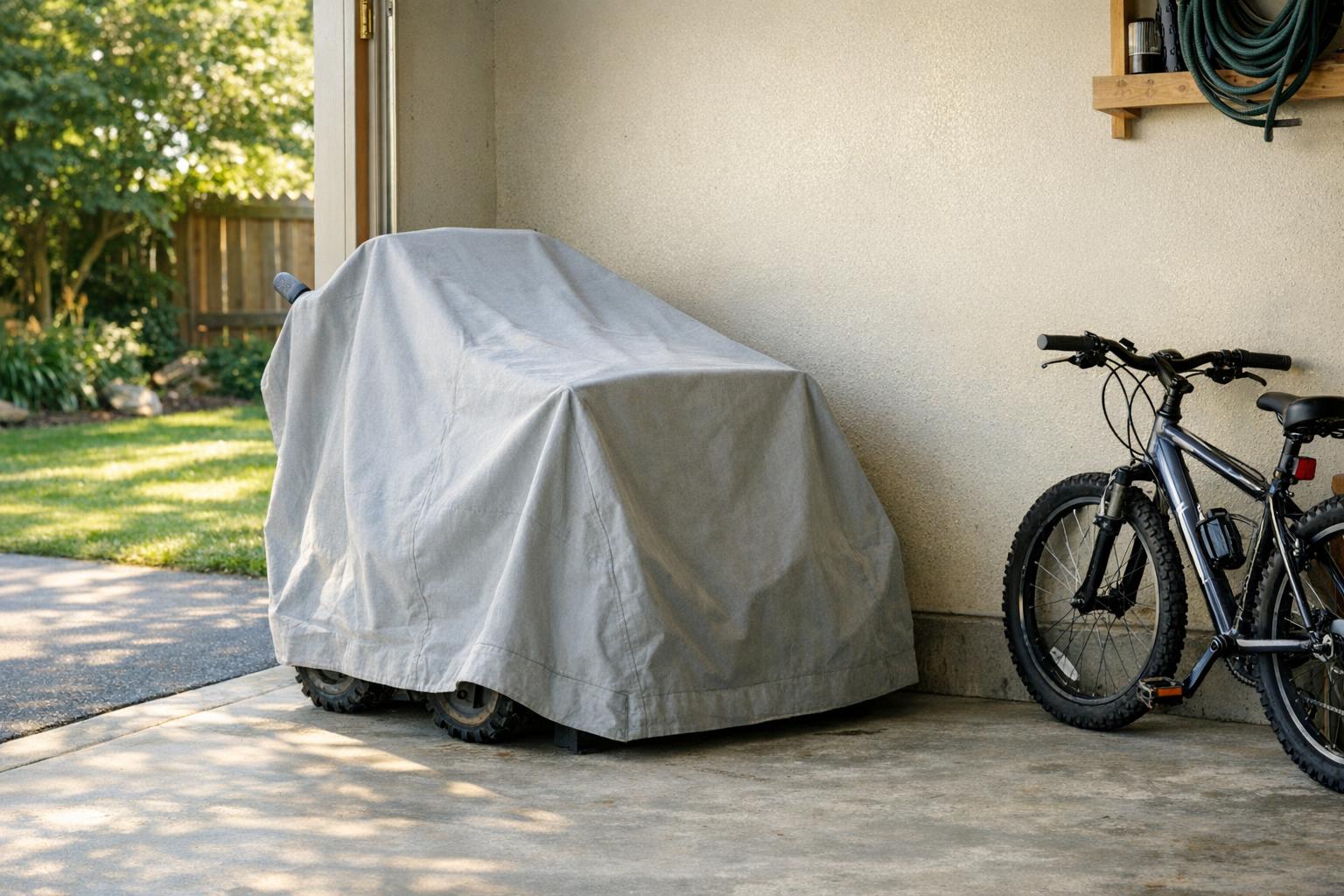
A dry, ventilated space out of direct sun is ideal. A cover keeps dust off, but a cover trapping moisture against a damp machine is worse than no cover, which is why drying comes first. If the machine must live outdoors under a cover, ventilate it and check it occasionally.
Covers, and the reasoning for choosing one, are covered in the parts and accessories guide.
Tyres, cables and the things that seize
Pneumatic tyres lose pressure over a long summer and can develop flat spots if the machine sits in one position for eight months. Check pressure against the figure on the sidewall or in the manual when you put the machine away and again when you take it out. Moving the machine once or twice over the summer costs nothing.
Control cables and chute mechanisms are the other things that seize. Manufacturers specify lubrication points and the lubricant to use; following that list at the end of the season is far easier than freeing a stuck chute crank in January. Do not improvise lubricants on parts where the manual names a specific product.
All of this belongs in the same end-of-season session as the fuel or battery work, and pairs with the routine items in the maintenance basics.
Coming back out in autumn
Storage done correctly makes the November restart uneventful. Reconnect, check fluids and pressures, start the machine, listen to it, and work through the pre-season list in the manual. If something is wrong, you have weeks rather than minutes to deal with it.
Review the safety essentials before the first use of the season. Never clear a clogged chute or auger housing with your hands. Shut the machine off, remove the key or battery pack, wait for every moving part to stop, and use the clean-out tool supplied with the machine.