Throw distance is one of the most prominently advertised snow blower specifications and one of the least transferable to your driveway. A stated figure describes a manufacturer's measurement under conditions they chose; your result depends on snow density, wind, chute angle and how fast you walk. Understanding what the number represents makes it useful as a comparison input rather than a promise.
What a stated throw distance represents
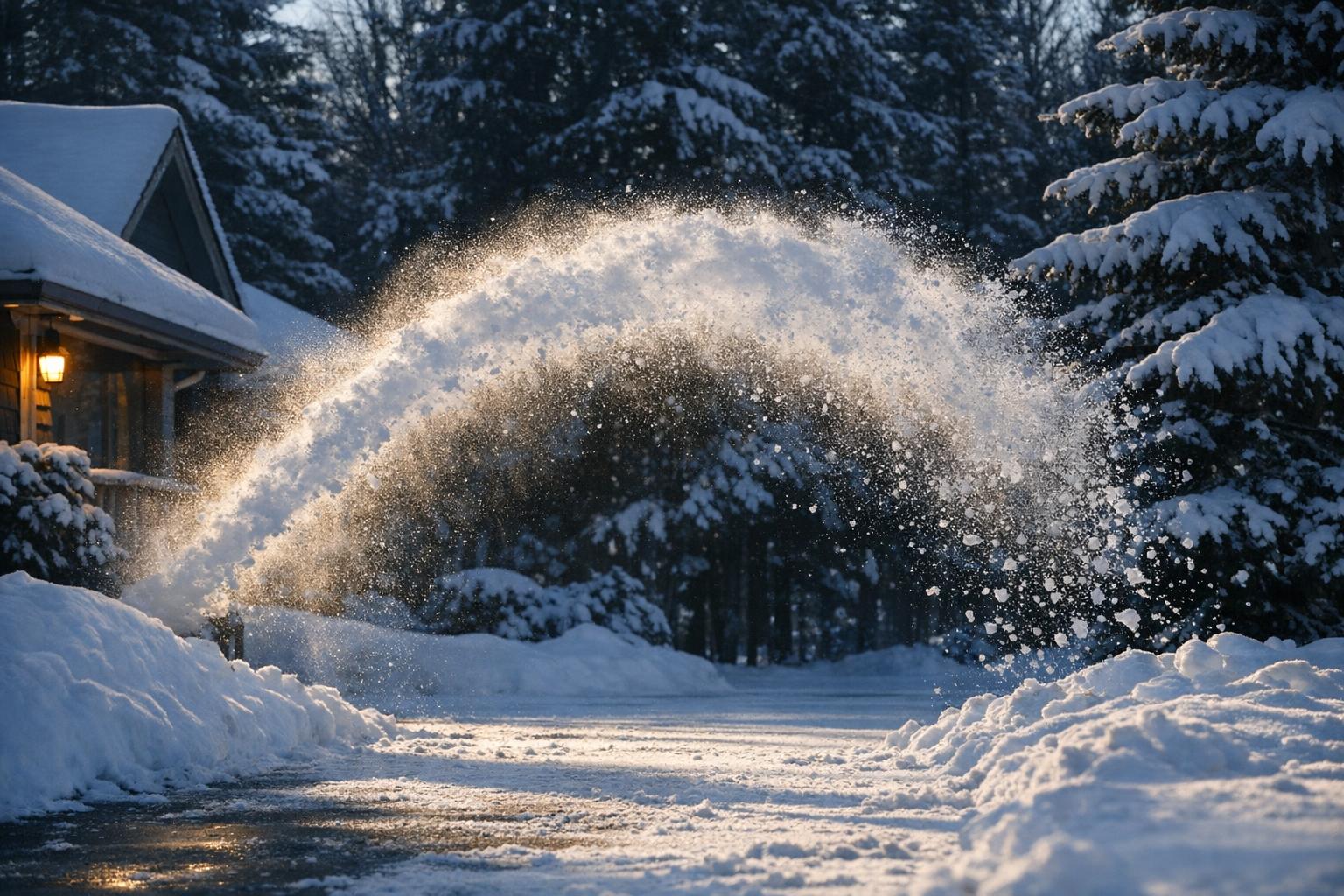
When a listing states a maximum throw distance in feet, it is a manufacturer figure obtained under conditions favourable to a long throw - typically light, dry snow, full engine or motor speed, and a chute deflector set high. It is a legitimate specification and a reasonable comparison point between machines, provided it is read as a ceiling rather than an average.
Not every listing documents one. Where a figure is absent, we do not infer it from a similar model; our methodology explains how a missing specification is handled in our scoring rather than filled in.
Why your result will differ
Heavy wet snow is denser and carries less far than dry powder from the same machine on the same day. A partly clogged chute throws shorter. Walking faster loads the auger more heavily and can reduce distance. Wind can add many feet in one direction and subtract them in the other.
None of this makes the specification useless. It makes it a relative measure: a machine documenting a longer throw will generally out-throw one documenting a shorter throw under the same conditions.
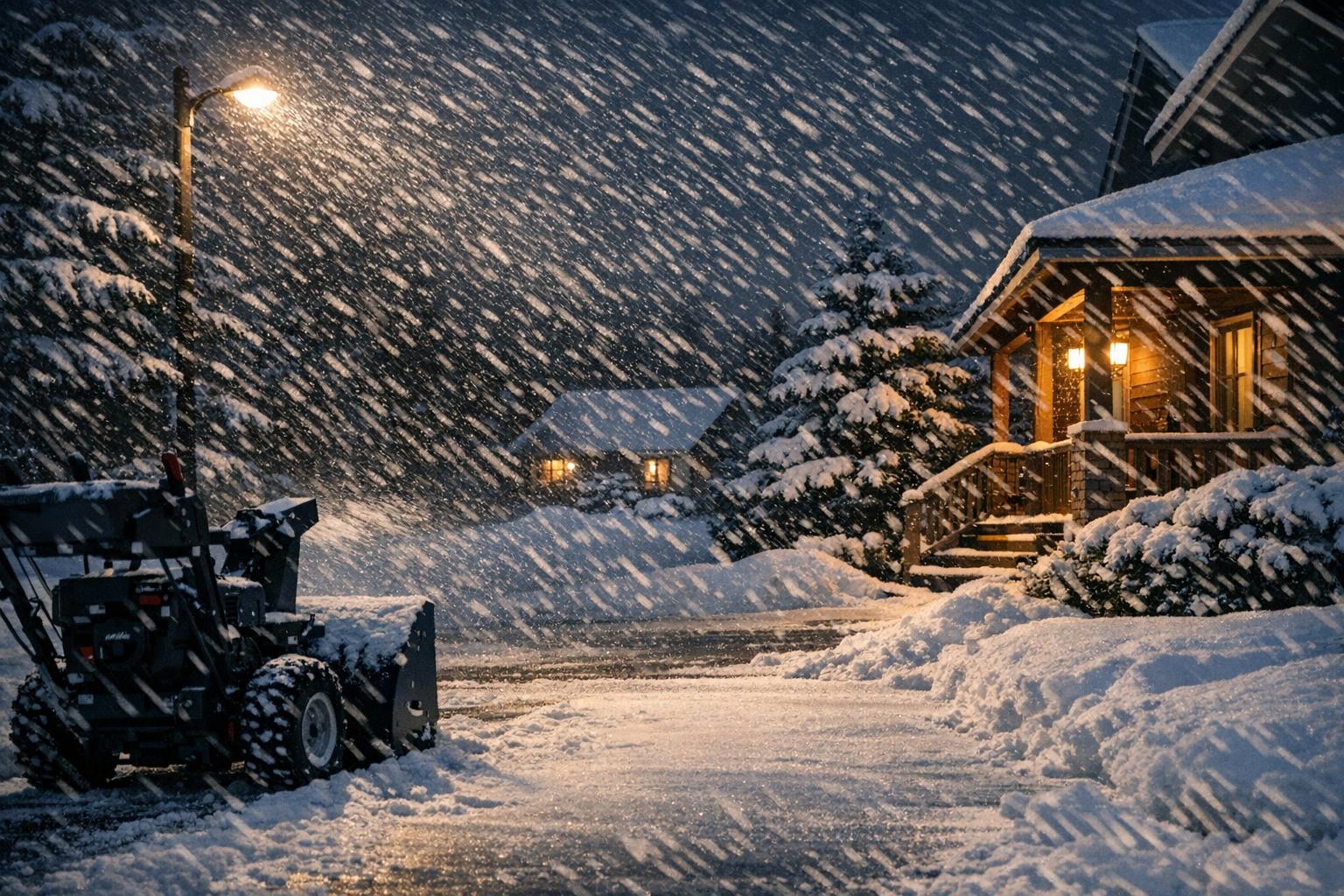
Chute rotation: how far and how controlled
Chute rotation range determines how much of the driveway you can clear without turning the machine around, and the control mechanism determines how easily you can change direction mid-pass. Manual crank controls are simple and reliable. Remote levers move the chute from the handlebars. Electric or joystick controls adjust rotation and deflection without releasing the drive.
On a driveway where the wind shifts or where you must avoid throwing toward a road, being able to change chute direction quickly matters more than the last few feet of stated distance.
The deflector and where the snow lands
The chute deflector sets the vertical angle and therefore trades distance against height. A high deflector throws far; a low one throws a shorter, flatter stream that is easier to place precisely. Adjusting the deflector to conditions is more useful than assuming maximum distance is always desirable.
Throwing snow as far as possible is not always the goal. Where it lands matters: piling it where it will block a sightline, bury a meter or slide back onto the driveway is a problem you create for yourself.
Where you must never aim
Never point the chute toward people, pets, windows, vehicles or a road. The discharge stream carries whatever the auger picked up, and on gravel that may include stone. Know where the chute is pointing before engaging the auger, and check again before each pass.
Bystander rules are covered in the safety essentials. Never clear a clogged chute or auger housing with your hands. Shut the machine off, remove the key or battery pack, wait for every moving part to stop, and use the clean-out tool supplied with the machine.
Reading a listing's chute specifications
Listings describe chute systems in several ways: degrees of rotation, the control type, and whether deflection is adjusted separately. A stated rotation figure of around 200 degrees or more generally means you can direct snow to either side and forward without repositioning the machine. Smaller figures mean more turning.
Where the listing does not state a rotation figure or a control type, we do not assume one. Check the manufacturer's documentation for the exact model before treating any of it as settled, and confirm the machine you are looking at is the configuration the specification describes.
Intake height, the specification nobody advertises
Throw distance gets the marketing attention; intake height quietly determines whether the machine can take a bite out of a plough ridge at all. The intake height is the vertical opening of the auger housing, and once snow is deeper than that figure you are taking it in layers regardless of how far the machine can throw.
Where a listing documents intake height, it is worth as much as the throw figure and sometimes more, particularly if your driveway meets a street that gets ploughed. Where it does not document it, we do not estimate it.
Width, intake height and throw distance together describe capacity far better than any one of them alone - which is why the clearing-width guide starts from the surface rather than from a spec sheet.
Using throw distance when comparing listings
Treat a documented throw distance as one input among several: clearing width, intake height, stage count and power source all matter as much or more. Our comparisons weight it as a documented specification where the listing states it, and never where it does not.
For wide machines where throw volume matters most, see the 28 inch and wider comparison; for the mainstream suburban band, the 24-26 inch two-stage comparison.